
Careers That Could See Strong Growth in the Coming Years
The strongest future careers are clustering around AI, data, healthcare, finance and skilled technical work. In the UK market, those are the areas where automation, regulation and real-world demand are all pulling in the same direction.
Key takeaways
- Growth is strongest where automation, regulation and human demand overlap.
- AI, data, healthcare, finance and technical roles all show durable hiring signals.
- The best entry route depends on how quickly you need to start and what qualifications the role demands.
- Transferable skills matter, but regulated careers still need formal training and recognised credentials.
- Real job boards and employer pages are better indicators than hype or job-title trends.
Which Future Careers are most likely to grow
| Career family | Example roles | Why demand is rising | Entry barrier |
|---|---|---|---|
| AI and product roles | AI Product Manager, AI Ethics Specialist, AI Engineer | Firms need people who can build, govern and commercialise AI safely | Usually medium to high; tech literacy and experience help |
| Data and research roles | Market research analyst | Companies still need human judgement to interpret customers, markets and campaigns | Medium; degrees help, but portfolios and apprenticeships can open doors |
| Healthcare roles | Dental hygienist, biometric technician | Ageing populations, prevention and more digital identification systems | Dental hygiene is high; biometrics varies by employer |
| Finance and advice | Personal financial adviser | Households need guidance on pensions, savings and debt as products get more complex | High; regulated, client-facing and trust-based |
| Skilled technical roles | Specialist technicians and trades linked to health, devices and infrastructure | Automation creates demand for hands-on work that machines cannot do alone | Often medium; vocational routes are common |
Indeed’s list of future-facing jobs includes biometric technician, dental hygienist, market research analyst and personal financial adviser, which is a useful reminder that growth is not limited to software. Some roles are easier for newcomers because the training route is clearer, while others usually call for qualifications, licensing or supervised practice. Indeed
Multiverse’s examples make the same point, only with more of a tech focus: AI Engineer, AI Product Manager and AI Ethics Specialist are all shaped by the need to build, steer and check AI systems rather than simply use them. So the fastest-growing work is not just coding; it also covers governance, implementation and product decisions.
Why these roles are gaining traction
Automation is changing jobs unevenly, and that is exactly why some careers are strengthening rather than shrinking. Multiverse notes that Software Engineers are already using AI to generate code, while Financial Managers are automating data entry and reporting, which frees people to focus on decisions, exceptions and higher-value analysis. Multiverse
That shift helps explain why McKinsey’s cited comparison matters: job ads with high risk for AI disruption fell by 38% between 2022 and 2025, while lower-risk roles fell by 21%. The wider the gap, the clearer the pattern becomes. Companies are still hiring, but they are hiring differently, with more weight on oversight, judgement and hybrid skills. Multiverse
Healthcare stays resilient because demand is rooted in people, not fashion. A dental hygienist combines prevention, patient contact and clinical competence, while a biometric technician sits closer to the systems side of identity, access and verification, where accuracy and trust matter just as much as speed.
Research and product work are also holding up because businesses need proof, not just intuition. Market research analysts help firms understand what people buy and why, and AI Product Managers turn technical capability into services customers can actually use. That makes it a durable career path, because it sits between technology, customers and commercial decisions.
There is a difference between a hot job and a durable career path. A hot job can spike because of a new tool or a hiring wave; a durable path keeps creating roles because the underlying problem stays in place, such as healthcare access, financial complexity, digital trust or product development.
Skills, qualifications and entry routes to target now
- AI and product roles: build technical literacy, product thinking, data interpretation, prompt fluency and an understanding of risk, bias and governance.
- Data and research roles: strengthen numeracy, spreadsheet work, survey design, statistics, writing and the ability to turn findings into plain English.
- Healthcare roles: expect formal study, supervised practice, patient communication and strict attention to standards, especially for dental hygiene and clinical support work.
- Financial-advice roles: develop numeracy, regulation awareness, client communication, ethics and comfort with long-term planning conversations.
- Transferable strengths: analysis, communication, attention to detail, resilience, digital confidence and the discipline to keep learning.
- Entry routes: apprenticeships, degree courses, employer training schemes, industry certifications, work placements and a portfolio that shows practical work rather than only theory.
For anyone aiming at AI roles, the fastest progress usually comes from combining a technical base with proof that you can work with people. An AI Product Manager doesn’t need to be the strongest coder in the room, but they do need enough technical understanding to ask better questions, make trade-offs and spot where a system could fail.
For healthcare and finance, the barrier is often formal rather than informal. In those fields, employers and clients expect regulated competence, so training routes, supervision and recognised credentials matter more than enthusiasm alone.
A simple framework to choose the right future career
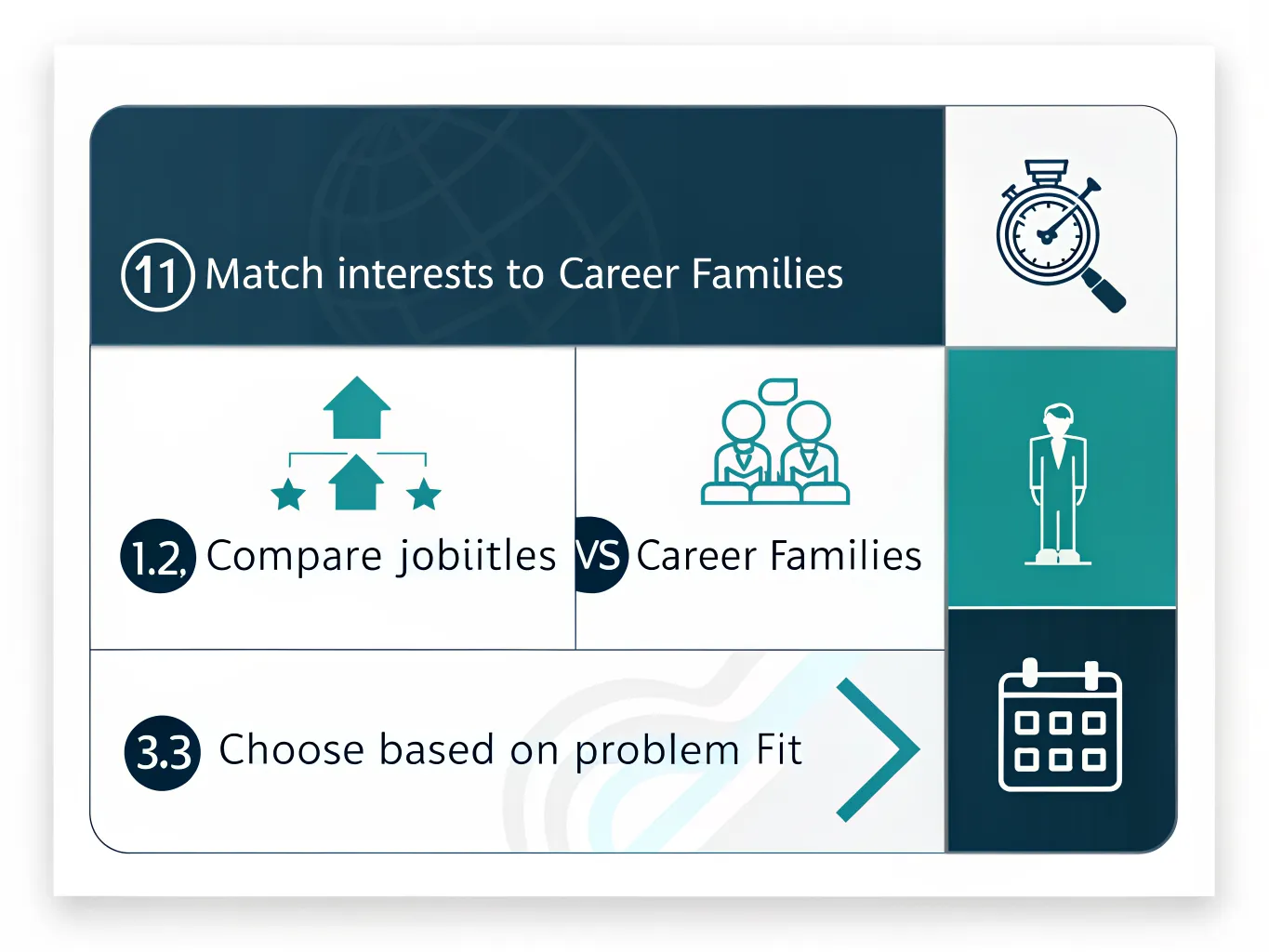
- Match interests to career families, not just job titles. If you like solving messy problems, look at AI, data and product work. If you prefer people-facing service, compare healthcare and advice roles.
- Check the qualification hurdle and time to entry. Some jobs need years of study; others can start with a short course, apprenticeship or employer-led route.
- Test demand using real job boards and employer career pages. Look for repeated titles, the same skill terms and vacancies that stay live across different weeks.
- Compare long-term stability, pay potential and day-to-day work. A role can sound exciting but still be a poor fit if the work style, client pressure or study load do not suit you.
Where to look for real openings and market signals
Future plc is a useful example of how employers show real hiring momentum because its careers page says it has over 3,000 employees working across 170+ media brands and is still building on its growth plans. That tells you more than a trend post does. It shows scale, variety and continued investment in specialist content roles. Future
Greenhouse job boards make it easy to see whether a company is hiring in product, engineering or data, and Future’s board currently lists roles such as Senior Product Designer and Staff Product Manager. Built In NYC is another example of a live company jobs page, even though the market itself is different, because it shows how employers keep vacancies visible and updated in one place. Greenhouse
The best signal is consistency. If the same skills keep appearing across different roles, the company is telling you what it values now and what it will probably need next. Social media can flag a trend quickly, but it rarely tells you whether employers are hiring at scale or just talking about a theme.
A quick check on job boards, employer pages and repeated wording will usually tell you more than a viral thread. r/Futurology can be interesting for spotting themes such as robotics, neuroscience, engineering, bioengineering and genomics, but it should sit beside actual vacancies, not replace them.
The practical takeaway
If you want a career with room to grow, aim for work that sits close to a lasting problem: trust, health, money, data or operational efficiency. Those are the spaces where employers keep hiring even when the tools change.
The safest bet is not the trendiest title. It is the role that gives you a useful mix of technical awareness, human judgement and a route to keep learning as the market moves.
Frequently asked questions
What are the best Future Careers right now?
The strongest growth areas are likely to be AI-related roles, data jobs, healthcare occupations and specialist finance or research roles. In the UK, that includes jobs such as AI Engineer, AI Product Manager, AI Ethics Specialist, market research analyst, dental hygienist and personal financial adviser. Those fields combine real business demand with skills that are hard to automate fully.
Which Future Careers are easiest to enter?
Roles with shorter training routes, such as some data, digital and healthcare support jobs, are often more accessible. The article also points to apprenticeships, employer training schemes and work placements as practical entry routes. Highly technical AI or regulated finance roles usually need deeper study, qualifications or supervised practice.
How do I know if a job is truly future-proof?
Look for repeat hiring, cross-industry demand, and tasks that depend on judgement, trust or technical oversight. The article also suggests checking whether employers are still advertising the same role across multiple vacancies, rather than chasing a one-off trend. If a job keeps appearing because the underlying problem still exists, it is a stronger sign of durability.
Do I need to study tech to get into Future Careers?
No. Many growth roles need communication, compliance, analysis, healthcare knowledge or customer insight rather than pure coding. The article makes clear that tech literacy helps, but roles such as market research, financial advice and healthcare can also grow through regulated practice, patient contact and commercial judgement.
Can career retraining pay off later in life?
Yes, if the target role has clear demand and a realistic entry route. The best option is one that matches your existing strengths and reduces the number of years needed to qualify. The article notes that apprenticeships, certifications and employer-led training can make a later-career switch more workable.